
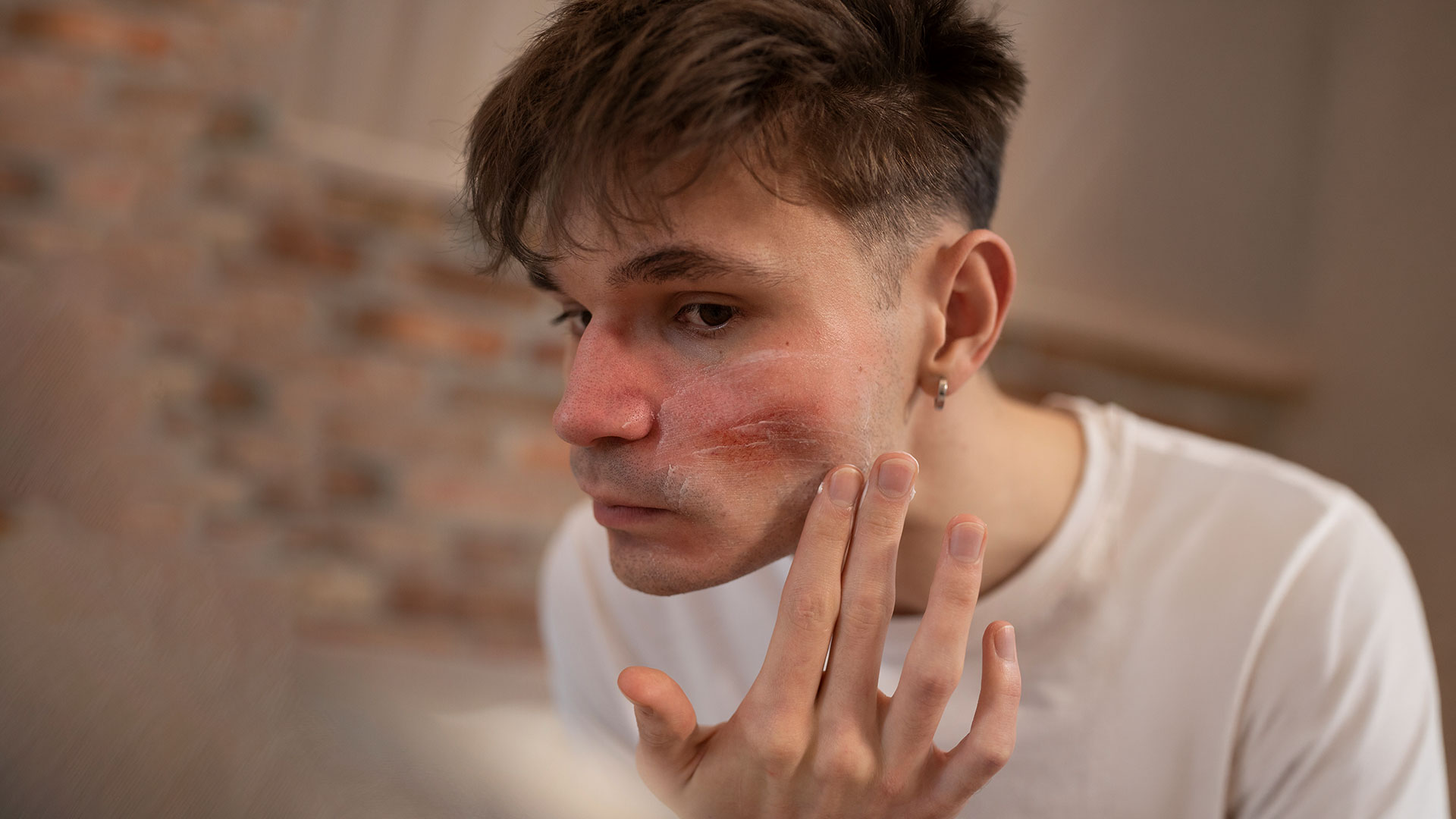
Demodex is a skin condition caused by microscopic mites, primarily of the species Demodex folliculorum and Demodex brevis, typically found on the face. These parasites live in hair follicles and sebaceous glands. They can normally be present as part of the skin's flora; however, when their numbers increase, itching, redness, and inflammatory lesions appear. This condition, frequently encountered in dermatology, requires accurate diagnosis and appropriate treatment.
What Are the Symptoms?
An increase in Demodex mites manifests in the following ways:
- Redness and acne-like lesions on the face: Concentrated particularly on the cheeks, around the nose, chin, and forehead.
- Intense itching and burning sensation: Usually worsens at night.
- Increased oiliness of the skin: Overactivity of sebaceous glands and the resulting blockage of sebaceous glands eventually lead to dryness and flaking of the skin.
- Eyelid itching and flaking around the eyelashes: Demodex brevis in particular causes problems around the eyes.
- Thickening and crusting of the skin: Seen in long-standing, untreated cases.
This excessive mite burden causes follicular and sebaceous gland obstruction, disruption of the skin barrier, tissue damage, and a stimulating effect on keratinocytes and macrophages.
How Is Demodex Diagnosed?
Demodex diagnosis begins with a clinical evaluation by a dermatologist. Samples taken from suspected areas are examined under a microscope.
Dermoscopy may also be used to support the diagnosis.
This method directly visualizes the presence of mites. Accurate diagnostic techniques help prevent unnecessary treatments. The use of inappropriate products can further weaken the skin barrier.
For this reason, it is important that the diagnostic process be carried out under specialist supervision.
A personalized treatment plan is developed at this stage.
What Are the Demodex Treatment Methods?
According to Assoc. Prof. Dr. Nur Cihan Coşansu, Demodex treatment requires a holistic approach. The following methods are used during the treatment process:
- Topical medications: Anti-parasitic creams are frequently preferred.
- Oral medications: Used under physician supervision in severe cases or when topical treatment is ineffective.
- Dermocosmetic care: Products that strengthen the skin barrier and reduce inflammatory lesions are supportive.
- Hygiene measures: Frequent changing of pillowcases and washing the face with appropriate cleansers are important.
- Laser and other dermatological treatments: In resistant and recurring cases, energy-based devices such as BBL and Pro Yellow laser are applied.
Patience is required during the treatment process. Although noticeable improvement is generally observed within 4–8 weeks, treatment should be continued for 3 months.
What Should Be Done to Prevent It?
- Pay attention to facial and eye-area hygiene
- Change pillowcases and towels 2–3 times a week
- Clean makeup tools regularly
- Eat a diet that supports the immune system
- Reduce stress and maintain regular sleep habits
- Use dermocosmetic products recommended by your dermatologist
These measures are effective in controlling the increase of Demodex.
Demodex is a mite infestation that adversely affects skin health and, when left untreated, reduces quality of life. According to Assoc. Prof. Dr. Nur Cihan Coşansu, with early diagnosis and appropriate treatment, skin complaints can be largely brought under control. Regular hygiene habits and dermatological support play a key role in prevention. It is very important to consult a dermatologist for any skin complaint.