
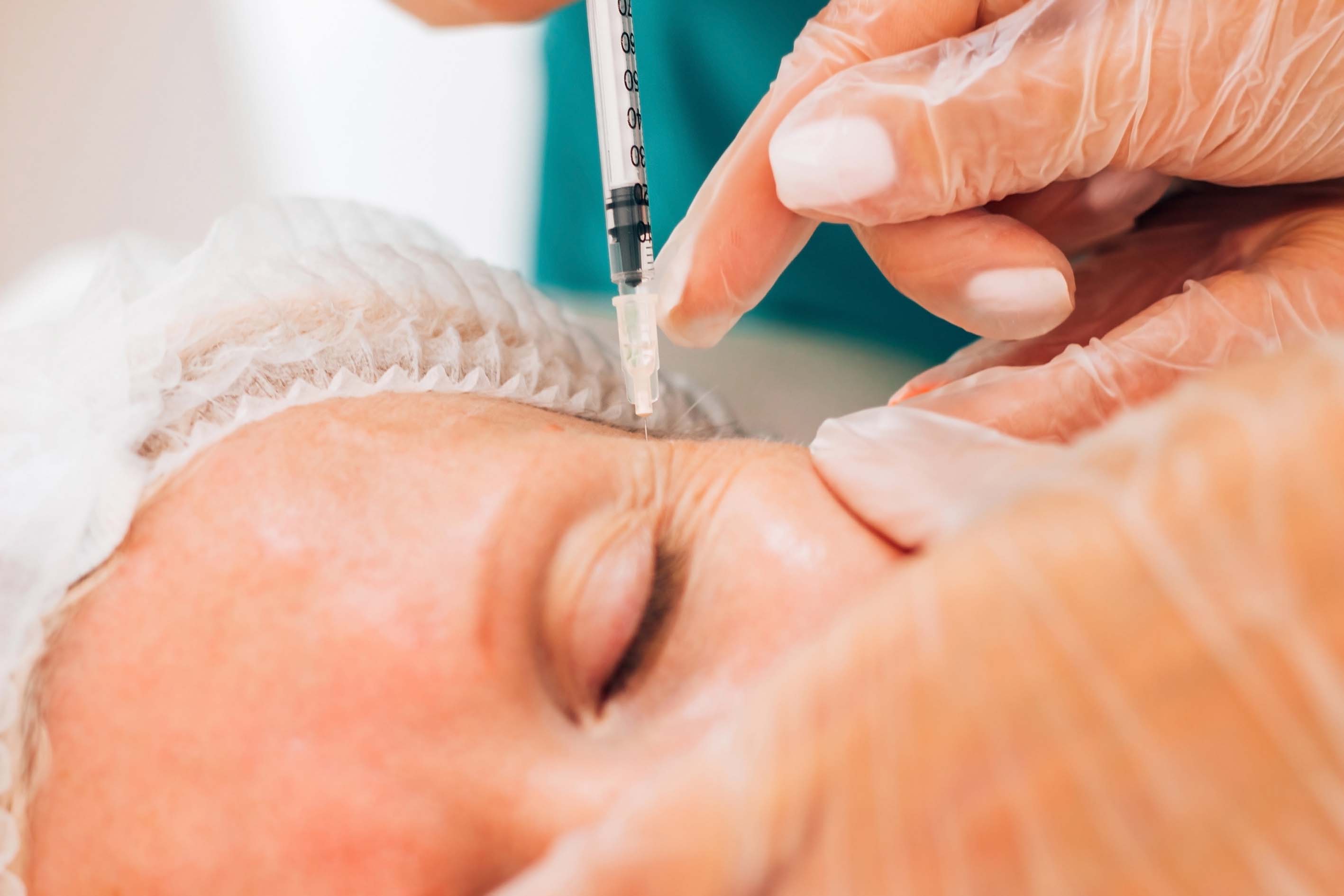
Do you know the fundamental differences between Botox and filler In this article, we will explain to you the 6 fundamental differences between botox and filler. Starting from content and components, we will compare their mechanisms of action, application areas, durations of effect, time to see results, and purposes of use. Thus, we will help you choose the most suitable aesthetic application for your needs.
1. Content and Component Difference
Botox and filler applications are completely different in terms of content and components. First, it is very important to understand the basic content of these two applications. It is necessary to determine which one to prefer in which situation. Now let's take a closer look at the components of these popular aesthetic applications.
Botox: Botulinum Toxin
Botox is a pure protein-based drug obtained from the bacterium Clostridium botulinum in a laboratory environment. Botulinum toxin, discovered in 1897, was first used medically in 1980 for strabismus treatment. Today, it stands out as one of the most powerful cosmetic applications. There are 7 different types of botulinum toxin (A, B, C, D, E, F, G), and type A is most preferred in aesthetic applications because its effect is strong and reliable.
Botox provides temporary relaxation of muscles by preventing the release of acetylcholine from nerve endings. Thus, wrinkles caused by facial expression muscles are significantly reduced. Botox, approved by the FDA in 2002 for wrinkle treatment, is today one of the most commonly used procedures in non-surgical aesthetics.
Filler: Hyaluronic Acid and Other Substances
Filler substances have a completely different mechanism from botox. The most commonly used filler is hyaluronic acid, which is naturally found in our body and gives the skin elasticity thanks to its moisture-retaining properties. As age progresses, this substance, whose production decreases, leads to dryness, wrinkles, and volume loss in the skin. Hyaluronic acid fillers compensate for these losses and give the skin a young, plump appearance.
In addition to hyaluronic acid, different filler substances such as calcium hydroxyapatite, polylactic acid, polycaprolactone, and polyacrylamide can also be used. Fillers do not stop muscle movements like botox; they add volume by being injected under the skin and stimulate collagen production. Thus, more permanent and natural results are obtained. Fillers, mostly preferred in the facial area, become more prominent in their rejuvenating effect when applied together with botox.
Both botox and filler applications have different mechanisms of action and areas of use. However, more comprehensive results can sometimes be obtained when used together. The muscle-relaxing effect of botox and the volume-adding feature of fillers complement each other. Thus, a younger and more rested appearance is provided on the face.
2. Mechanism of Action
There are fundamental differences between botox and filler in terms of mechanism of action. These two popular aesthetic applications serve the purpose of reducing wrinkles and maintaining a youthful appearance in completely different ways. So, how do they work? Let's now examine the mechanism of action of each in detail.
Botox: Temporarily Paralyzes Muscles
Botox works by temporarily blocking the signals transmitted from nerve endings to muscles. When botulinum toxin is injected, it interrupts the communication between nerves and muscles. Thus, the muscles cannot contract and wrinkles disappear due to the absence of facial expression movements.
Filler: Adds Volume and Stimulates Collagen
Filler, on the other hand, is injected directly into the area in the skin or subcutaneous tissue. Substances such as hyaluronic acid fill the area where volume loss occurs and shape the area. In addition, they trigger collagen production, supporting the natural renewal of the skin.
3. Application Areas
Botox is most commonly applied to dynamic wrinkles. Areas such as the forehead, between the eyebrows, and around the eyes (crow's feet) are the most preferred areas. Fillers, on the other hand, are used in areas of volume loss such as lips, cheeks, under the eyes, nasolabial folds, jawline, and chin.
4. Duration of Effect
The effect of botox usually lasts 3-6 months. Fillers, depending on the substance used, last from 6 months to 2 years. Different types of fillers have different durabilities; hyaluronic acid fillers usually last 6-18 months, while calcium hydroxyapatite-based ones can last 12-18 months.
5. Time to See Results
The effects of botox usually begin to be seen 3-7 days after the procedure. The full effect appears within 10-14 days. The results of filler applications, on the other hand, are seen immediately. However, the final appearance is formed within 1-2 weeks with the reduction of swelling. The doctor can make immediate corrections if necessary because the result of the filler is seen immediately. However, in botox, evaluation is made a few days later.
6. Purpose of Use and Aesthetic Goal
Botox and Filler applications, which serve different aesthetic goals, are used for different purposes. However, both applications aim to provide a young and vigorous appearance. Therefore, to determine which application is more suitable, the basic purposes must first be understood. Because the correct application makes it easier to obtain results in line with expectations.
Botox: To Reduce Expression Lines
Botox is applied especially to reduce dynamic wrinkles caused by facial expression movements. Forehead lines, frown lines, and crow's feet around the eyes are the most common application areas. With temporary relaxation of muscles, wrinkles lose their visibility, and the skin looks smoother and younger. It also slows the aging process by preventing the formation of new wrinkles.
Botox stands out not only for aesthetic purposes but also for its functional benefits. It is an effective method in the treatment of medical problems such as excessive sweating, migraine, and teeth grinding. Additionally, applications to the eyebrows and around the eyes create a slight lifting effect on the eyebrows, giving a more vibrant and vigorous expression. Thus, botox stands out as a multi-purpose application both aesthetically and health-wise.
Filler: To Eliminate Volume Loss
The main purpose of filler applications is to restore the volume lost on the face with aging. Over time, hollowing of the cheeks, depressions under the eyes, and thinning of the lips can be seen. Hyaluronic acid-based fillers fill these areas, accentuating facial lines and providing a more vibrant appearance. They are also effective in reducing static wrinkles; therefore, they are a complementary method in cases where botox is insufficient.
Filler is applied not only aesthetically but also to balance facial lines and correct asymmetries. For example, chin tip filler can help reduce the appearance of a double chin while balancing facial proportions. It also stimulates collagen production, renews the skin tissue, and leaves a healthier appearance in the area even after the filler dissolves. In this aspect, filler is an application that offers a long-term rejuvenating effect.
In conclusion, there are important differences between botox and filler. The content, mechanism of action, application areas, durability, and time to see results are different. Actually, both applications complement each other, and natural results are obtained with combined use. The non-permanence of both applications allows for re-planning according to changes in facial lines and personal preferences. Botox and filler performed with the right practitioner and technique provide a younger and more rested appearance. When choosing, it is important to get expert physician support in line with your personal needs and expectations.