
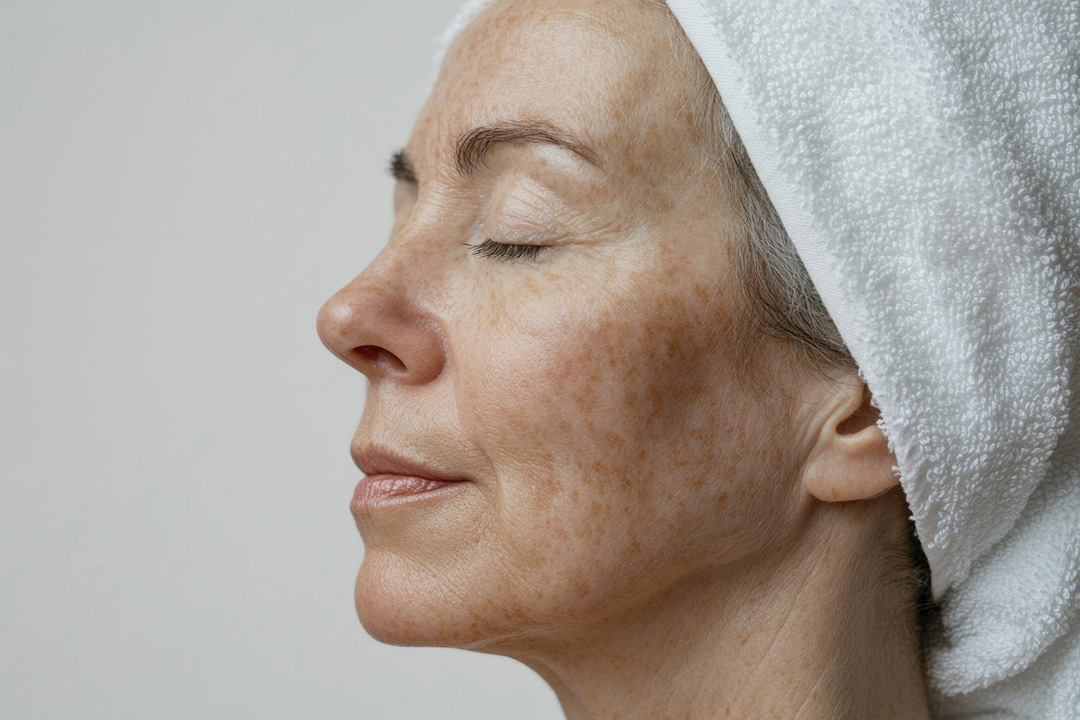
Laser treatment for age spots is one of the most effective methods for removing skin spots commonly seen after age 50. These spots typically appear on the hands, face and décolleté. Caused by long-term sun exposure, these dark spots distort the overall skin tone over time.
Laser-based pigmentation treatment balances skin tone, reducing melanin buildup and renewing the skin surface. After application, patients see visible results quickly. As one of the most preferred methods in dermatology, laser treatment offers lasting solutions for age spots.
Why Do Age Spots Form?
The main cause of age spots is long-term UV exposure. As a protective response, the skin increases melanin production. When this pigment does not distribute evenly, it concentrates in certain areas, causing spots.
After age 40, the skin's renewal capacity decreases, making melanin buildup permanent. Risk is higher in fair-skinned people. Genetics, hormonal changes, pregnancy and birth control pills also contribute to increased pigmentation.
Hormonal imbalances are among the causes of hyperpigmentation. During menopause, combined with sun damage, age spots become more pronounced.
How Is Laser Spot Treatment Performed?
Laser treatment for age spots is planned by an expert dermatologist. First, skin type, spot depth and color are analyzed.
Before the procedure, the skin is cleansed and topical anesthetic cream is applied if needed. The laser device focuses on the spot areas, targeting melanin pigment and breaking it into small pieces. The skin then enters its own renewal process.
Most patients see 70-80% improvement in a single session. Deep pigment may require 3-6 sessions. After the procedure, spots briefly darken and crust, then within 7-10 days give way to brighter, more even-toned skin.
Session time is generally 15-30 minutes and full results appear within 2-3 months.
Methods Used in Laser Spot Treatment
Different laser systems are used in age spot laser treatment. Each is chosen based on skin structure and spot depth.
- IPL (Intense Pulsed Light): Targets pigments with broad-wavelength light. Particularly effective on superficial spots.
- Q-Switch Laser: Breaks down melanin cells with short pulses. Generally produces effective results in 1-2 sessions.
- Fractional CO₂ Laser: Acts on both upper and lower skin layers to boost collagen production and renew the skin.
- BBL (Broadband Light): Treats pigmentation irregularities with a broad-spectrum light system.
- Nd:YAG, Thulium and Picosecond Lasers: Effective for deep pigment, reducing spots while preserving the skin's natural structure.
These laser systems target pigment without damaging skin tissue and fade spots over time.
Considerations After Laser Treatment
Proper aftercare is critical for lasting, healthy results. Mild redness, sensitivity and warmth may occur after the procedure but typically subside within a few hours.
Post-application points to watch:
- Use sunscreen (SPF 30 or higher) regularly.
- Avoid hot water, sauna, Turkish bath and sports for the first 48 hours.
- Do not touch or rub the treated area.
- Avoid makeup for the first 24-48 hours.
- Use the doctor's recommended moisturizer and healing products consistently.
Because skin becomes more sensitive after laser treatment, the habit of sun protection prevents recurrence. Annual maintenance sessions also help maintain stable skin tone.
Laser treatment for age spots is considered an effective method for skin rejuvenation. After treatment, age spots are largely removed. Expert dermatologists must select different laser technologies based on skin type. Treatment is personalized and applied carefully.