
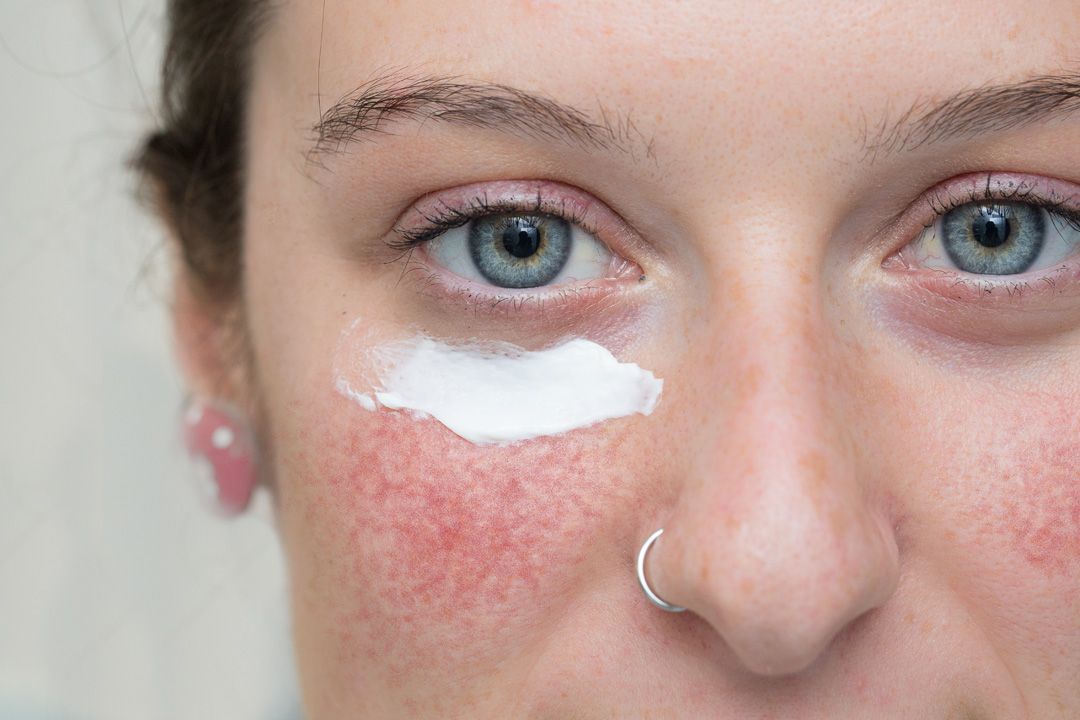
Rosacea is a chronic, inflammatory skin condition usually affecting the face. It appears with redness, vascular dilation and acne-like lesions on the nose, cheeks, chin and forehead. With correct diagnosis and treatment, it can be brought under control, although in most cases a complete cure may not be possible.
According to Assoc. Prof. Dr. Nur Cihan Coşansu, rosacea is triggered by environmental factors and genetic predisposition. It affects patients' quality of life and presents in subtypes with different clinical features.
What Are the Types of Rosacea?
It is divided into four main types.
These subtypes directly affect the clinical picture, severity and treatment plan. Some patients have a single subtype, while others may have more than one at the same time. For this reason, each patient must be evaluated individually.
1. Erythematotelangiectatic Rosacea
This is the most common form of rosacea.
The key feature is persistent facial redness and visibility of superficial blood vessels. The redness may initially appear as flares but can become permanent over time. The skin is typically sensitive, with a tendency to burn and sting.
The main features of this type:
- Widespread, persistent facial redness
- Visibility of fine vascular structures (telangiectasia)
- Heat sensation, burning and sensitivity
If appropriate treatment is not started early, the redness can become permanent.
2. Papulopustular Rosacea
Papulopustular rosacea is a subtype often confused with acne.
Unlike acne, blackheads do not appear and lesions usually develop on a background of redness. Inflammation is more pronounced and skin sensitivity is increased.
Key features include:
- Pimple-like inflamed bumps on a background of persistent redness
- Occasionally painful or sensitive lesions
- More common in middle-aged adults
Incorrect acne treatments can worsen symptoms in this subtype.
3. Phymatous Rosacea
Phymatous rosacea is a rarer subtype representing a more advanced stage.
It is characterized by skin thickening, irregularity and tissue overgrowth, most often affecting the nose and leading to a condition called rhinophyma.
Main features:
- Pronounced nasal thickening and shape changes
- Rough, coarse skin surface
- Sebaceous gland enlargement
It typically appears in long-untreated cases, so early intervention is important.
4. Ocular Rosacea
Ocular rosacea can occur independently of skin findings or together with them. In some patients eye complaints precede skin findings, so diagnosis is often delayed.
Possible symptoms in this type:
- Redness and burning in the eyes
- Eyelid inflammation and crusting
- Dry eyes, stinging and light sensitivity
Collaboration between dermatologist and ophthalmologist is important in treatment.
Rosacea Treatment Methods
Rosacea treatment is planned based on subtype, severity and the patient's skin features.
Assoc. Prof. Dr. Nur Cihan Coşansu emphasizes that an individualized approach, rather than a standard protocol, is decisive for treatment success. The goal is to bring symptoms under control and prevent flares.
1. Medical Treatment
Medical treatment is the foundation of rosacea care.
- Topical agents: help reduce redness and inflammation.
- Systemic agents: added when topical treatment is insufficient.
- Immunomodulators: may be used in selected cases, especially in resistant patients.
2. Laser and Light Treatments
Laser and light systems are particularly effective for vascular signs.
- Pro-Yellow Laser: reduces facial redness and vascular visibility.
- Intense Pulsed Light (IPL/BBL): supports treatment of telangiectasias and inflammatory lesions.
These methods are typically combined with medical treatment.
3. Lifestyle and Skincare
An important part of rosacea treatment is avoiding triggers.
- Use broad-spectrum sunscreen regularly.
- Avoid spicy, very hot foods and drinks.
- Limit alcohol consumption.
- Avoid cosmetics that irritate the skin.
4. Treatment of Ocular Rosacea
Ocular involvement requires a special approach.
- Eye drops and regular eyelid hygiene are recommended.
- Collaboration between dermatologist and ophthalmologist is important.
Rosacea is defined as a chronic skin condition requiring different treatments for each subtype. Erythematotelangiectatic, papulopustular, phymatous and ocular types must be evaluated separately. According to Assoc. Prof. Dr. Nur Cihan Coşansu, early diagnosis, correct treatment and regular care can significantly improve patients' quality of life. A patient, disciplined and personalized approach is essential.