
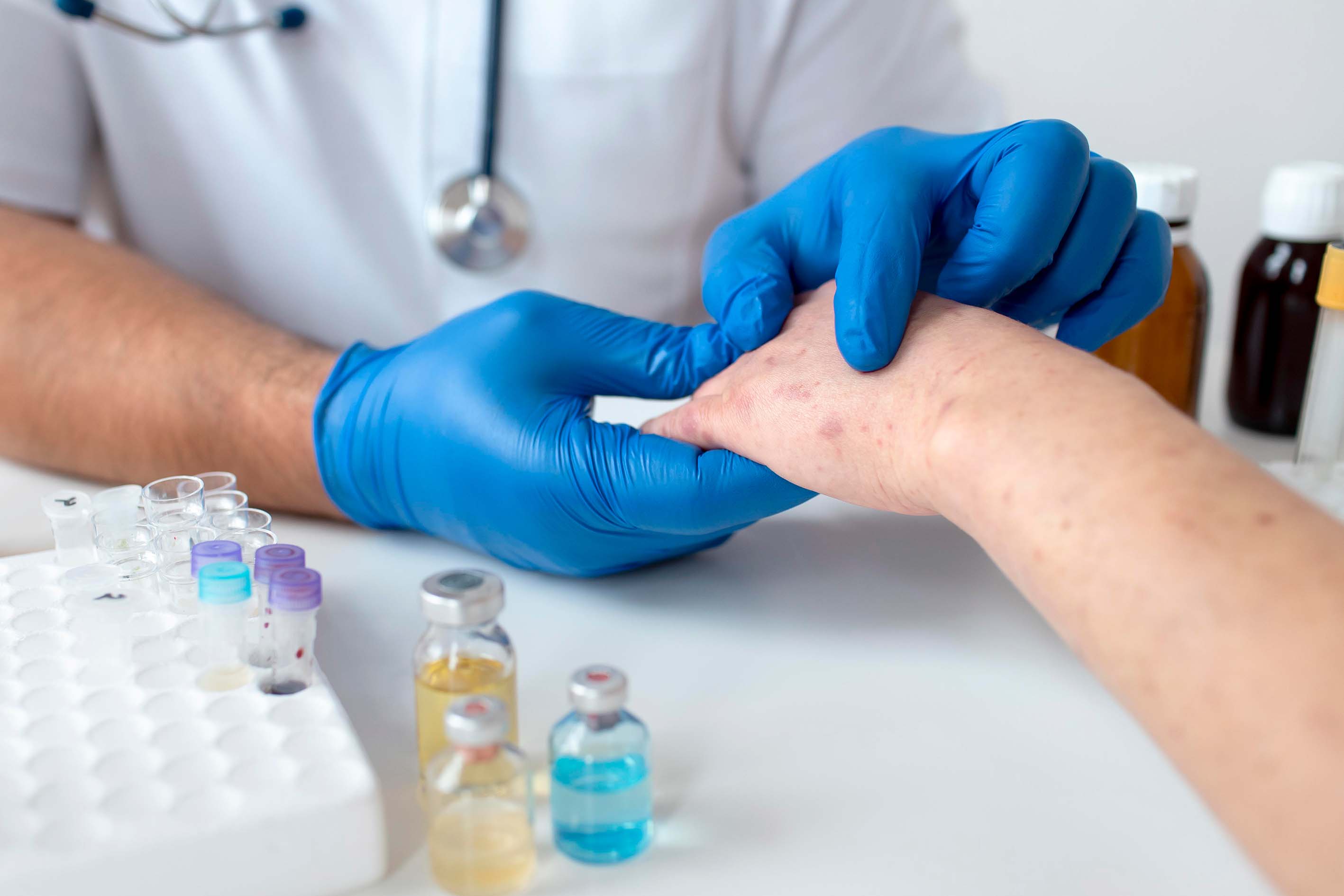
Having accurate knowledge about Dermatological Treatment Methods used to address various skin issues is the first step toward achieving healthy skin. Skin diseases can arise from various causes such as climatic changes, physical factors, or allergens, each requiring different diagnostic and treatment processes. As dermatology specialists, we create personalized plans to treat common skin problems.
What Are the Dermatological Treatment Methods?
Dermatological treatment methods are highly varied in modern medicine and play an important role in the effective treatment of skin diseases. Different approaches are used depending on the type, extent, and severity of skin problems. A proper understanding of these treatment options helps identify the best solution for patients.
Topical Treatments (Creams, Ointments)
Topical treatments are the most commonly used and generally first-choice methods in dermatology practice. These products are applied directly to the skin and act locally. Ointments are suitable for dry and lichenified chronic dermatoses, particularly preferred for thick-skinned areas such as palms and soles. However, they are not suitable for use on hairy areas and folds such as groin and underarms.
Creams, on the other hand, are oil-in-water mixtures and are cosmetically superior to ointments. They spread easily and apply well to the skin. They are ideal for use on weeping lesions and skin folds. Lotions are also preferred for application on large areas and hairy regions.
Topical treatments vary in content:
- Corticosteroids (reduce inflammation)
- Retinoids (accelerate skin cell renewal)
- Hydroquinone, kojic acid, arbutin, vitamin C (effective in pigmentation treatment)
- Antibiotics (clindamycin, erythromycin)
- Benzoyl peroxide (effective in acne treatment)
Systemic Treatments (Oral Medications)
Systemic treatments are necessary when topical treatments are insufficient. These treatments, which have made significant progress in dermatology in recent years, have improved patients' quality of life. New-generation drugs such as immunomodulators, biological agents, and targeted therapies have expanded treatment options.
Isotretinoin is a synthetic retinoid derivative used as a second-line treatment in acne patients who do not benefit from conventional therapy. It is considered the most effective treatment in patients with severe papulopustular and nodulocystic acne. Additionally, in patients who tend to scar, it is recommended to start treatment without delay, even if acne severity is mild or moderate.
Oral antibiotics are also frequently used in the treatment of severe and widespread acne. Tetracycline, doxycycline, and minocycline are the most commonly used oral antibiotics. However, to prevent the development of resistance, antibiotic treatment should not exceed 3-4 months and must be used under dermatologist supervision.
Phototherapy (Light Therapy)
Phototherapy plays an effective role in dermatological diseases by using the therapeutic effect of UV rays. It is used in many skin diseases including psoriasis, lichen planus, eczema, vitiligo, widespread itching, pityriasis lichenoides, and mycosis fungoides.
Different wavelengths such as UVA, broad or narrow band UVB are used in treatment. PUVA treatment is preferred when no response is obtained from UVB treatment. Phototherapy works by reducing inflammation in the skin and improving disease symptoms. The average treatment duration is 2-3 months, with sessions held 2-4 times a week.
Treatment sessions begin with a few seconds of light exposure. The dose is gradually increased in each session based on criteria such as redness and itching. However, it should be noted that very high doses applied in the long term may increase the risk of skin cancer.
Surgical Interventions
Dermatological surgical procedures are widely used in the treatment of skin cancers and benign lesions. The most commonly performed methods include skin biopsy, excision, incision, electrocauterization, and cryotherapy.
A skin biopsy is the procedure of taking a 3-5 mm sample from a suspected area under local anesthesia. In an excisional biopsy, the entire lesional area is removed, while in an incisional biopsy, a smaller sample is taken.
Electrocauterization is a method that burns lesions by converting electrical energy into heat. It is used in the treatment of problems such as warts, calluses, ingrown nails, and seborrheic keratosis. Cryotherapy creates controlled tissue destruction in the lesional area using liquid nitrogen gas. It is particularly successful in wart treatment.
Modern Dermatological Treatment Techniques
Today, dermatological treatment methods that revolutionize skin health have become much more effective with the advancement of technology. These modern techniques provide fast and lasting solutions to skin problems, improving patients' quality of life.
Laser Treatment
Laser treatment offers effective and safe solutions for the removal of pigmentation, freckles, and capillary problems on the skin surface. This method is applied by delivering controlled energy beneath the skin thanks to advanced technology. Fractional laser corrects deep wrinkles while tightening the skin, supporting the formation of younger-looking skin. Treatment is customized according to the patient's skin type and the problem being treated. Sun protection before and after treatment is highly important.
Chemical Peeling
Chemical peeling is a technique applied to reduce signs of aging on the skin, even out skin tone, and lighten pigmentation. In this procedure, the upper layer of the skin is controllably exfoliated using chemicals such as alpha hydroxy acids, salicylic acid, and trichloroacetic acid. It can be applied at three different depths: superficial, medium, and deep. After treatment, redness and sensitivity are expected on the skin. It may be applied in 2-8 sessions depending on the skin type and the severity of the problem.
Dermapen and Microneedling
Dermapen is an effective method applied using microneedles to stimulate collagen production in the skin. Many micro-channels are vertically opened in the skin with needles, and therapeutic serums are delivered beneath the skin through these channels. It is particularly effective in improving acne scars, fine lines, and skin texture. Generally applied in 3-4 sessions, this treatment is repeated every 4-6 weeks.
Botox and Filler Applications
Botulinum toxin (botox) is a treatment frequently applied by dermatologists that reduces wrinkles by minimizing the movements of facial muscles. Hyaluronic acid fillers are used to address volume loss in the face and tighten the skin. Both applications generally provide quick results without affecting social life. However, it is extremely important that they be performed by an expert physician. Incorrect applications can cause asymmetry, infection, or allergic reactions.
Factors Affecting Treatment Success
The healing process for skin diseases depends on many factors. The success of dermatological treatment methods is also directly affected by these factors. The patient's response to treatment may vary based on personal characteristics and the approaches applied.
Type and Extent of the Disease
The type and extent of skin condition are among the most important factors determining treatment success. Treatment duration varies according to the type, location, size, and number of lesions. Some patients see results in 1-2 sessions, while others may need 6-8 sessions. For example, psoriasis (0.6) and atopic dermatitis (0.5) are among the diseases that most affect children's quality of life. In addition, none of the current treatment options can completely eliminate scars such as keloids.
Patient's Age and Immune Status
Age and immune system status significantly affect the effectiveness of dermatology treatments. For example, atopic dermatitis is seen in children, while rosacea generally appears after age 30. The frequency of certain skin problems is higher in patients with Parkinson's disease, facial paralysis, and weakened immune systems. Additionally, the number of treatment sessions is greater in people with large and deep lesions and those with weakened immune systems.
Treatment Adherence and Lifestyle
Another factor determining treatment success is the patient's adherence to treatment. Following the dermatologist's recommendations regularly, keeping up with checkups, and using medications as prescribed increases the chance of success. Stress in particular is one of the biggest triggers of vitiligo, and the patient's lifestyle changes are critically important during the treatment process. Sun protection is always very important for vitiligo patients.
Dermatologist Follow-up and Check-up Frequency
Regular follow-up of dermatological diseases is of great importance for preventing the recurrence of treated conditions. After healing is achieved, routine check-ups must be performed at certain intervals. This way, in the event of infection, inflammation, or other complications, early detection and necessary precautions can be taken. More frequent check-ups are recommended for patients with risk factors.
In conclusion, identifying the right treatment method is of great importance for protecting your skin health. Therefore, you should definitely have your skin problems evaluated by a specialist dermatologist. Additionally, adhering to treatment, attending regular check-ups, and applying recommended lifestyle changes will increase success. Remember that every patient is unique and a personalized approach is the most effective way to protect your skin health. Therefore, early diagnosis and treatment for your skin problems will accelerate your achievement of healthy skin.