
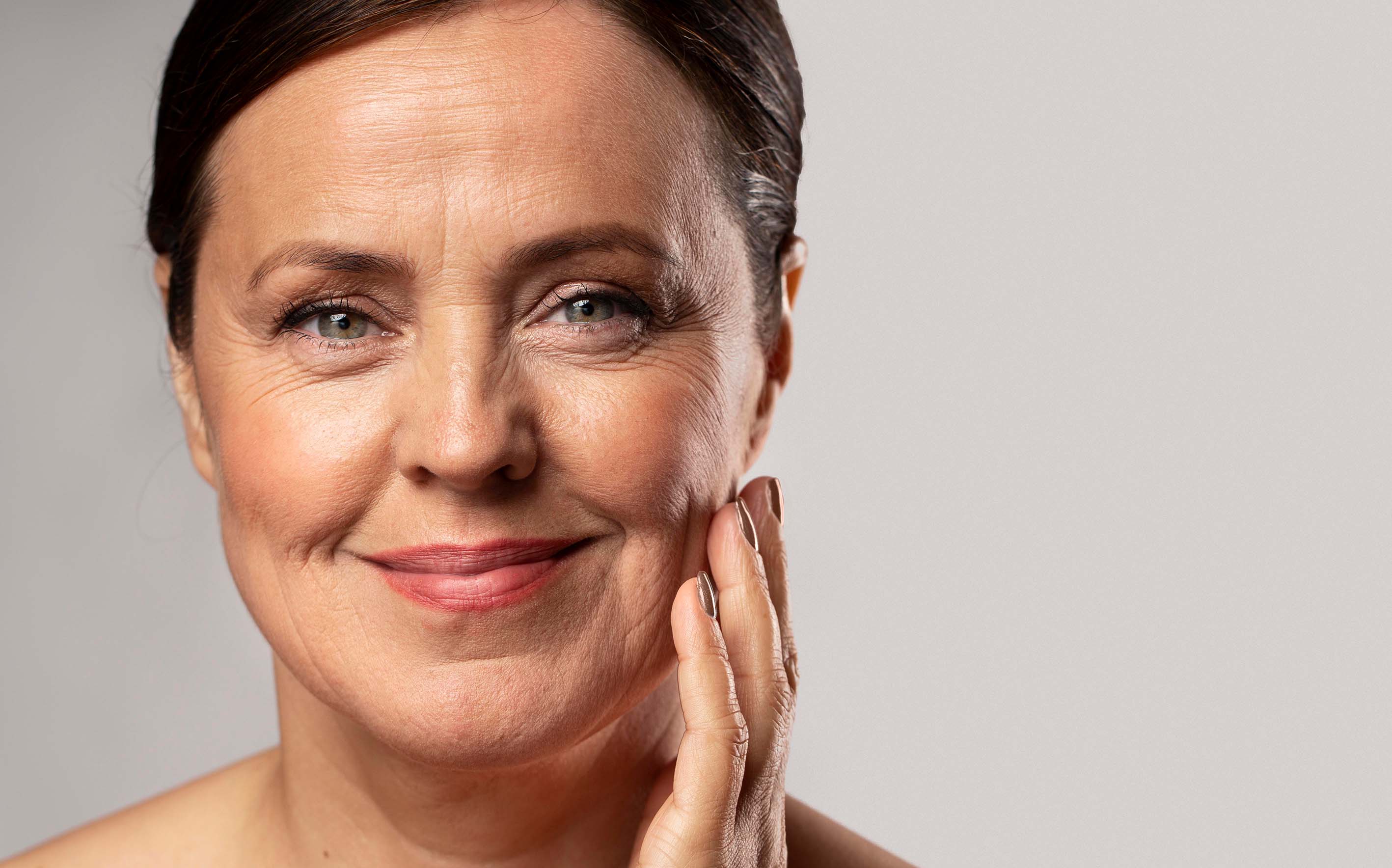
Wrinkle formation manifests differently in every individual. It results from the complex interaction of many factors, from lifestyle to genetic factors. As we age, the decrease in collagen and elastin production in our skin makes this natural process inevitable. However, today, there are various wrinkle treatment methods to alleviate the appearance of wrinkles and even prevent them in some cases.
What Is a Wrinkle?
Defined as the lines and folds that form on the skin, wrinkles are a natural element of aging seen on the skin. This dermatological condition usually occurs as a result of the skin losing its elasticity and firmness. They become most prominent in sun-exposed areas such as the face, neck, hands, and forearms.
Wrinkle types are basically divided into two groups.
- Dynamic lines: They are not real wrinkles but facial expression lines that occur when frowning or smiling. Over time, with the upper skin losing its properties, they become permanent.
- Static lines: They are real lines that exist even when your face is at rest. Some wrinkles can deepen further over time and turn into prominent grooves.
Today, there are many options for wrinkle treatment such as medications, skin renewal techniques, filler applications, and surgery. With these options, wrinkles identified in the early period can be corrected with applications such as botox, while static lines can be corrected with filler materials and skin renewal methods.
How Do They Form?
Although wrinkle formation is part of the skin's natural aging process, there are many factors that accelerate or slow down this process. As we age, our skin naturally loses its elasticity and durability. As age advances, collagen and elastin fibers in the deep layers of the skin decrease, and thus the skin begins to lose its firmness and tightness.
With age, natural oil production in the skin decreases, and this creates dryness in the skin, making wrinkles more visible. However, apart from this natural process brought about by aging, the most important environmental factor that accelerates wrinkle formation is sun rays. Ultraviolet rays (especially UVA and UVB) damage the connective tissue of the skin and break down collagen and elastin fibers. As a result, the skin begins to sag and wrinkle early.
Lifestyle habits also play an important role in the development of wrinkles. For example:
- Smoking: The chemicals it contains prevent collagen formation in the skin, accelerating the normal aging process. Research has proven that smokers develop twice as many wrinkles as non-smokers.
- Poor diet: A diet especially rich in sugar, fat, and refined carbohydrates accelerates skin aging.
- Repeated facial expressions: In the long term, intense use of facial expressions leads to deep wrinkles, especially between the brows, on the forehead, and around the eyes.
In addition, air pollution, stress, and insufficient sleep also increase free radical production in the skin, triggering the formation of premature aging signs. Especially in fair-skinned individuals, since the skin structure is genetically more sensitive to the sun, wrinkle formation can be earlier and more prominent.
Wrinkles: Types According to Age and Skin Type
Your skin type is an important factor that directly affects the speed and appearance of wrinkle formation. Our genetic makeup, age, and environmental factors shape how wrinkles appear on our skin.
Dry Skin
Dry skin tends to age earlier compared to oily skin. This is because dry skin produces less oil and consequently the skin barrier weakens. Since dry skin has a low moisture-retention capacity, fine lines and wrinkles become prominent earlier. In addition, this skin type is more prone to aging with its continuously peeling and thinning structure.
Oily Skin
It generally wrinkles later. In oily skin, which appears pale but shiny, pores are wide and it is generally prone to acne. However, the excess oil in the skin acts as a natural barrier that delays wrinkle formation.
Combination Skin
It contains two areas with different needs. This situation makes choosing the right treatment difficult. In this skin type, where the T-zone is oily and the cheeks and eye area are dry, different signs of aging can be seen in different areas of the face.
Skin Color
The skin of white-skinned and thin-skinned people wrinkles and ages much more easily. In contrast, in thick-skinned, dark-skinned people, wrinkling and aging are observed later and more slowly. This is because the melanin pigment that determines skin tone also affects skin aging.
As age advances, this situation is inevitable in every skin type. This process, which usually begins in the mid-20s, becomes more prominent in the 30s. Especially deep forehead wrinkles can become noticeable at age 30 and the need for treatment may be felt.
In people who use their facial expressions a lot, the eye and forehead areas tend to wrinkle more quickly. These dynamic wrinkles can turn into static wrinkles over time and become permanent.
The Areas Where Wrinkles Are Most Commonly Seen
Although all areas of our body are prone to wrinkle formation, they are seen more frequently and earlier in some areas. The face, neck, hands, and forearms, which are sun-exposed areas, are the parts where wrinkles are most prominent. In these areas, the skin is both more open to sun damage and wears out more quickly due to the effect of facial expressions. Our face has a structure that shows the effects of aging from top to bottom.
- Forehead Area: The horizontal lines that form on the forehead generally begin to show their effects at ages 20-25. They deepen due to intense use of facial expressions.
- Brow Area: The vertical lines that form between the brows are more prominent in people with a frowning habit.
- Eye Area: The skin around our eyes is the thinnest and most sensitive in our body. For this reason, it shows the signs of aging earliest and most intensely in this area. Under-eye wrinkles first appear at the lash line and spread around and downward over time. On the sides of the eyes, lines called "crow's feet" form in parallel.
- Mouth Area: It is one of the areas where wrinkles are frequently seen. The nasolabial folds extending from the side of the nose to the corner of the mouth and the lines around the lips occur due to both intense use of facial expressions and collagen loss in the skin. Facial expressions such as smiling trigger lines at the corners of the mouth. Therefore, wrinkles in this area become particularly prominent in middle and advanced ages.
- Neck Area: The neck area also tends to wrinkle early due to its thin skin structure and being in constant motion.
If left untreated, wrinkles in all these areas can make a person look more tired, older, and unhappier than they are.
Wrinkle Treatment Methods
In today's medical world, there are many effective treatment methods for wrinkle problems. These methods, supported by modern technologies, vary according to different skin types and depths.
Botox Application
It prevents wrinkle formation by temporarily restricting the movement of facial expression muscles. It is effective for 4-6 months, especially in wrinkles on the forehead, sides of the eyes, and between the brows. The quality of the botulinum toxin used in botox application directly affects the result.
Hyaluronic Acid-Based Filler Materials
These acid injections compensate for volume loss in the skin and reduce the appearance of wrinkles. These applications are effective on the lip area, nasolabial lines, and deep wrinkles. They show permanence between 6 months and 2 years. In addition, thanks to the peptides and hyaluronic acids in the filler materials, they also contribute to skin renewal.
Laser Treatments
They play an important role in the treatment process by increasing collagen production in the skin. Modern techniques such as fractional laser, while providing effective results by renewing the upper layer of the skin at specific points, also shorten the recovery time.
PRP (Platelet Rich Plasma) Therapy
It accelerates skin renewal by injecting platelet-rich plasma obtained from the patient's own blood. PRP treatment is generally applied in 3-5 sessions and provides lasting results.
Chemical Peeling
It triggers cell renewal by peeling the upper layer of the skin. This method, applied with fruit acids such as glycolic acid or stronger acids such as TCA, is preferred for fine wrinkles.
Dermatology specialists in particular prepare personalized treatment plans and recommend combinations that will yield the best results. In some cases, mesotherapy, microdermabrasion, or radiofrequency treatments can also be included in this plan.
In conclusion, when modern wrinkle treatment methods are applied under the supervision of a specialist physician, they provide significant improvement depending on skin type and age. Since personal needs, expectations, and the condition of the skin are decisive in treatment selection, it is important to consult a specialist dermatologist or aesthetic physician.