
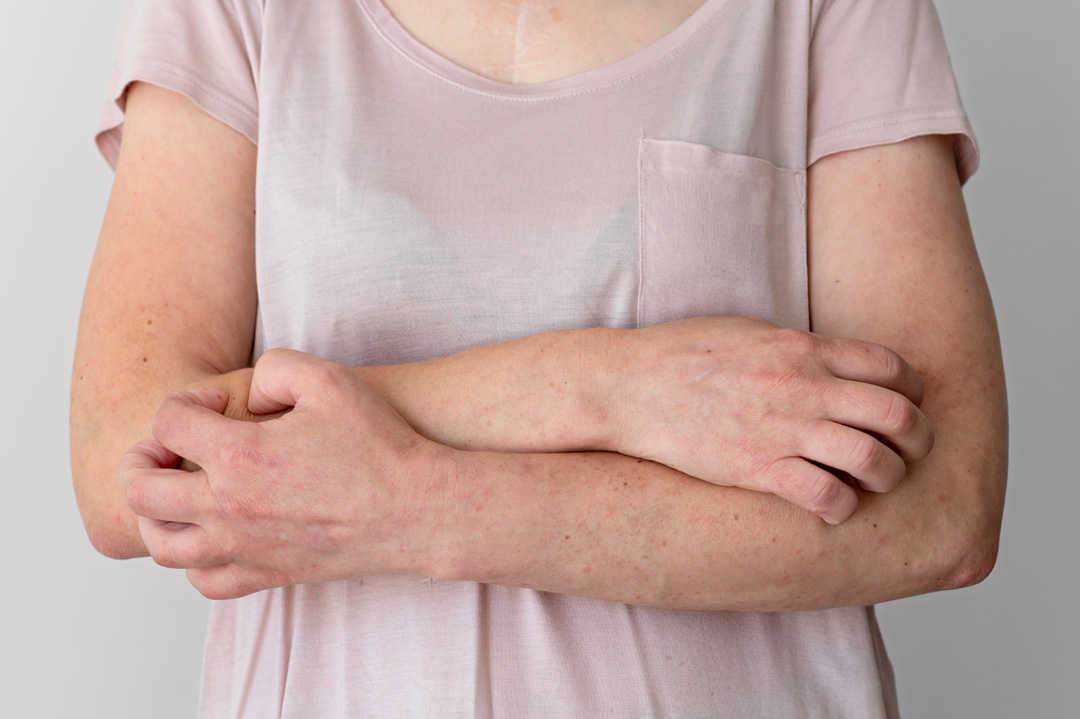
Atopic dermatitis is an inflammatory skin disease characterized by chronic and recurrent attacks, intense itching, and skin dryness. Its incidence has increased significantly since World War II. It starts before the age of 5 in 90% of patients and in infancy in 50%. This disease, which mostly affects children worldwide, unfortunately significantly reduces quality of life.
In this article, we will discuss the causes, diagnostic methods, and treatment options of atopic dermatitis in detail.
What Is Atopic Dermatitis and Who Does It Affect?
Atopic dermatitis is a chronic skin disease that occurs through the interaction of immune system hypersensitivity, genetic predisposition, and environmental factors. Its most distinctive features include dryness, redness, and itching.
Worldwide, it affects 10-30% of children and 2-10% of adults. Its incidence is higher especially in developed countries.
The risk is 3-5 times higher in individuals with a family history of asthma, allergic rhinitis, or eczema. This disease is not contagious, but susceptibility to infections may develop because the skin barrier is weakened.
The disease sometimes progresses through a process called "atopic march". That is, eczema that starts in childhood continues with asthma or allergic rhinitis in later periods.
There are different types according to age:
- Senile Type (over 60): Progresses with general dryness and cracks on the skin.
- Infantile Type (0-2 years): Redness and weeping plaques are seen on the face and scalp.
- Childhood Type (2-12 years): Intense itching and dryness occur inside joints such as the back of the elbows and knees.
- Adult Type (over 12): Chronic itchy rashes develop on the face, neck, and hand areas.
Why Does Atopic Dermatitis Occur and How Is It Diagnosed?
Atopic dermatitis results from the combination of genetic predisposition and environmental factors. The heritability rate is approximately 75%. At the basis of the disease are epidermal barrier disorder and excessive response in the immune system. Especially mutations in the FLG (filaggrin) gene reduce the skin's moisture retention capacity. This causes dryness and sensitivity in the skin.
Triggering factors include:
- Cold and hot weather changes
- Detergents, soaps, and cleaning products
- Pollens, dust mites
- Stress and sleep disorders
- Food allergens (such as milk, eggs, nuts)
The diagnosis of atopic dermatitis is usually made by dermatological examination. The most important symptoms are itchy rash, chronic course, and family history of allergy. Although there is no definitive laboratory test, allergy tests (prick test, serum IgE level) are auxiliary diagnostic tools. Food allergy evaluation must also be done in infants.
What Are the Treatment Methods?
Treatment is planned in two stages:
- Acute attack treatment
- Maintenance (protective) treatment
In the acute period, corticosteroid creams, calcineurin inhibitors, and antihistamine syrups recommended by the dermatologist are used. Creams containing cortisone are safe when applied with the right content, dose, and duration. The aim in maintenance treatment is to strengthen the skin barrier and prevent moisture loss. For this:
- Moisturizer should be applied 2-3 times a day.
- Moisturizers should be applied within the first 5 minutes after bathing.
- Products without fragrance, alcohol, or dye should be preferred.
Avoiding triggers is an important part of treatment. Excessively hot environments, stress, detergents, and woolen clothing can increase symptoms.
In severe cases, immune system regulating drugs or biological treatments may be applied. Diet regulation is also important. Allergy tests should be done to identify potential allergens such as milk, eggs, or nuts. Probiotic supplementation contributes to disease control by supporting the gut flora. Finally, with stress management, adequate sleep, and proper skin care, atopic dermatitis can be controlled in the long term.
Early diagnosis is extremely important in the treatment of Atopic Dermatitis. Therefore, a dermatologist examination is recommended when the symptoms of the disease are first seen. Regular moisturizing and avoiding triggers will be effective in disease control. The use of products that strengthen the skin barrier by patients provides great benefit.