
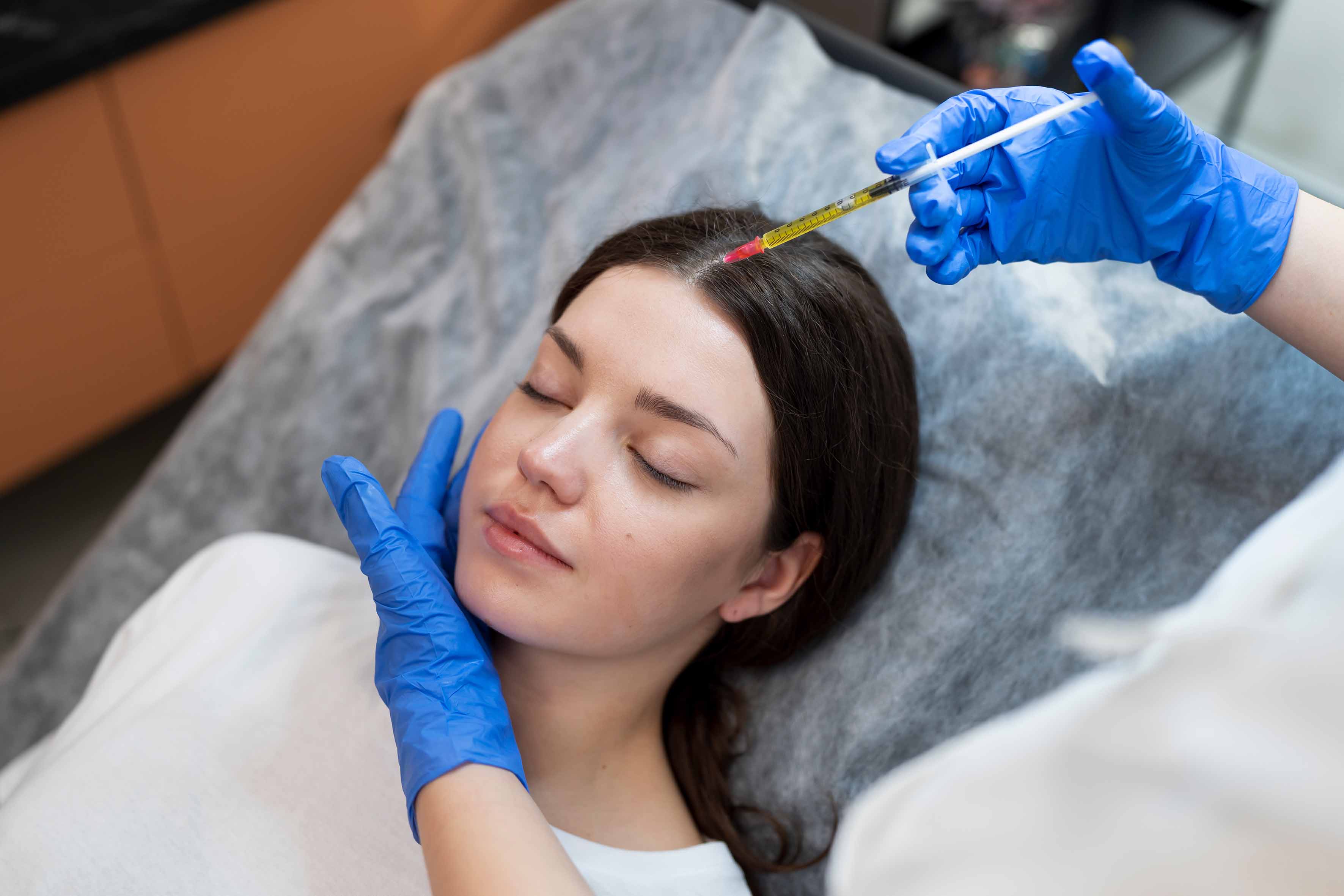
Would you like to harness your body's own healing power? PRP treatment does exactly that. Operating on the principle of injecting plasma rich in growth factors - obtained from the patient's own blood - into areas that struggle to heal, this method has become very popular in recent years.
What Is PRP Treatment?
PRP treatment is an innovative regenerative therapy in medicine. The name comes from the English initials of "Platelet Rich Plasma". The most basic answer to what PRP is: a specialized blood product obtained from the patient's own blood that accelerates the body's natural healing mechanisms.
The plasma obtained with PRP treatment contains 5-10 times more platelets than normal blood. Because it comes from the patient's own blood, it carries no risk of allergy or rejection and strengthens the body's own healing mechanisms. PRP hair treatment, skin rejuvenation, orthopedic problems and chronic pain treatment are common uses. PRP is not a stem cell therapy, but the growth factors released by platelets activate stem cells in the environment, so it works with stem cells indirectly. In modern medicine, it is an effective option for accelerating cell renewal slowed by environmental and genetic factors, often as an alternative to drug therapy.
What Does PRP Treatment Do?
PRP (Platelet Rich Plasma) treatment accelerates the body's natural healing by injecting concentrated platelets - obtained from the patient's own blood - into the affected area. The growth factors in platelets support tissue repair, reduce inflammation and stimulate cell renewal.
With a wide range of uses, PRP is used in dental implants, orthopedic disorders, tendon problems, non-healing wounds, osteoarthritis and heel spurs. In aesthetics, it is preferred to prevent hair loss, rejuvenate the skin and reduce acne and scar tissue. Because the patient's own blood is used, the risk of allergy is low and it can be applied safely even on sensitive skin. Combined with laser and peeling, it enhances effects and accelerates recovery.
How Is PRP Treatment Performed?
It is typically performed by a specialist and lasts about 30-40 minutes.
PRP treatment begins with drawing a small amount of blood. The blood is spun in a centrifuge to obtain platelet-rich plasma. This concentrated plasma is then injected directly into the target area. Imaging guidance or local anesthesia may be used as needed.
Treatment is generally planned over several sessions, 2-3 weeks apart. For joint conditions, three sessions are typical. Patients can return to daily life quickly. Avoid bathing and sun exposure on the first day. Treatment can be repeated after 1-2 years if needed.
When Is PRP Used?
PRP treatment has become an effective method in many areas of medicine. Its versatility delivers successful results in various conditions.
In orthopedics, PRP is particularly preferred for:
- Tendon injuries (tennis elbow, Achilles tendinitis)
- Muscle injuries and tears
- Ligament injuries (knee and ankle)
- Osteoarthritis treatment
- Cartilage damage
- Heel spur
- Delayed-union fractures
Dermatology
In this field PRP is an effective option for skin renewal and rejuvenation. It is highly successful in reducing acne scars, scar tissue, stretch marks and wrinkles. Combined with peeling and laser, it accelerates the treatment process and provides more lasting results.
Hair Treatment
PRP offers an effective solution for hair loss. It produces successful results, especially in male-pattern hair loss (androgenetic alopecia). The treatment stimulates hair follicle activity, preventing further loss and supporting new growth. It is usually applied as 6-8 sessions every 15 days. Live follicles are important for success.
PRP treatment is also used to support healing of dental implants, accelerate recovery after plastic surgery and treat non-healing wounds. In sports medicine it is used for fast recovery in muscle and tendon injuries of professional athletes.
It is mainly applied in two age groups: young and middle-aged. About 90% of treatment studies cover active people in their 20s and 30s.
Who Is PRP Not Suitable For?
As with every treatment, PRP is not suitable for everyone. Certain health conditions require avoidance for safe, effective results. Some medical conditions can affect treatment success or risk the patient's health.
PRP should not be applied to:
- Those with abnormal platelet function or low platelet counts
- People with anemia
- Cancer patients or those with a family history of cancer
- People with active infections
- Pregnant or breastfeeding women
- Those with a history of blood disorders
- People taking blood thinners
- Those with autoimmune diseases
- People with infection or inflammation in the treatment area
If any of these apply, consult your doctor before PRP treatment. After a pre-procedure consultation, treatment can be applied if appropriate. Pushing for treatment despite contraindications can do more harm than good, so share your medical history openly. Checking blood values before PRP hair treatment or other applications is also important for safety. A pre-treatment health check can reduce potential side effects and improve outcomes.
When Are PRP Results Seen?
The time it takes to see results depends on the area. With joint injections, effects are usually felt within a few weeks. Scalp injections require about six months for full effect. With PRP skin rejuvenation, dry, dull skin is observed to improve from the first sessions. In later sessions, wrinkle softening and improved elasticity are noticed.
Permanent results, including for PRP hair treatment, require a certain number of sessions. After 3-4 applications every 15 days, more lasting effects are achieved. To maintain optimal results, these should be repeated every 10-12 months. With individual variation, most patients see noticeable improvement within 2-3 months of the first treatment.
In orthopedic applications, pain reduction typically begins within a few days. Tissue healing occurs over about 6 weeks on average. Seeing the full effect of treatment usually takes 3-6 months. Recovery after PRP treatment depends on the patient's overall health and response. Patience and following your doctor's advice are essential for the best outcome.