
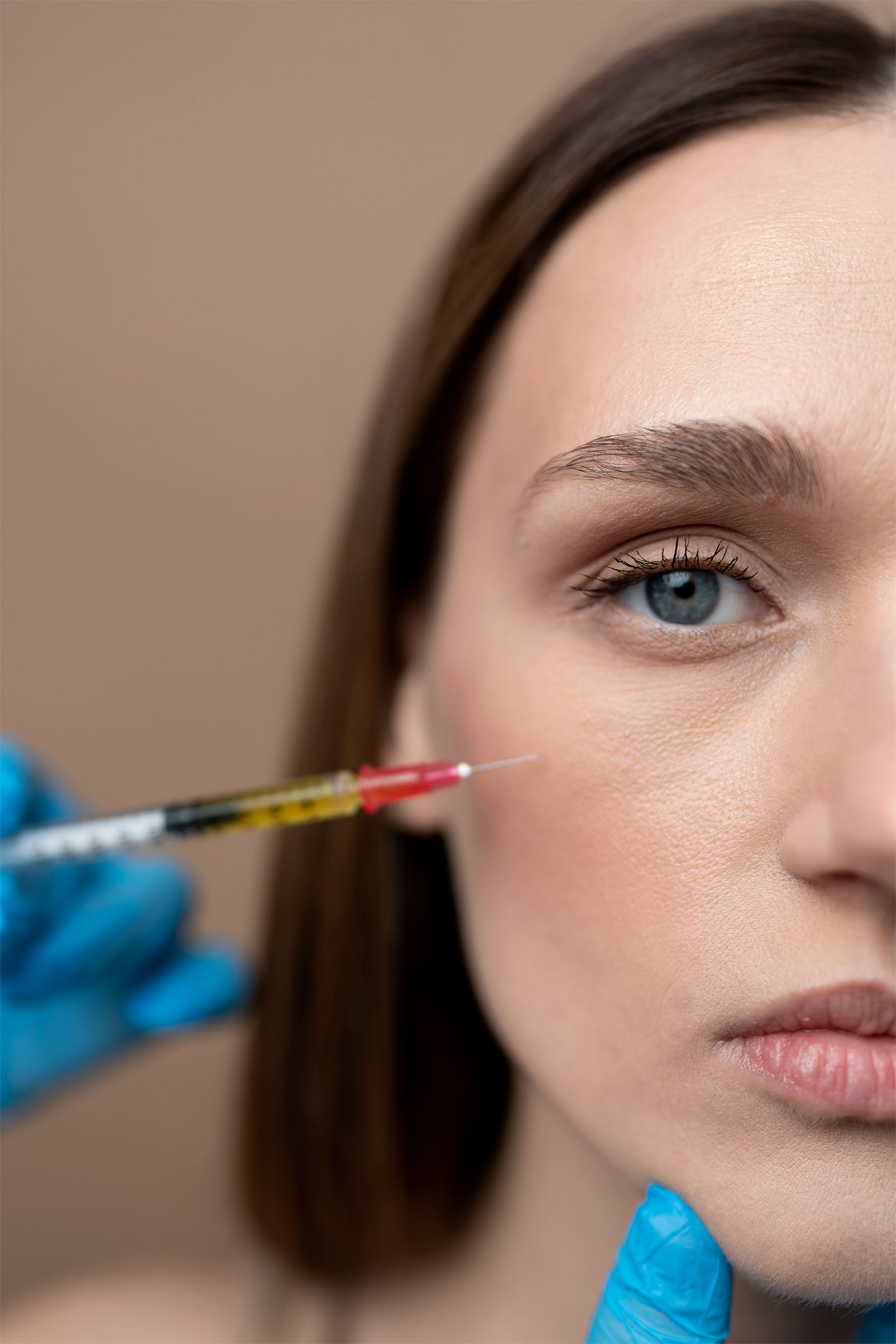
In recent years, PRP treatment - which we hear about often in aesthetics - has become an important treatment option for skin renewal and hair loss. PRP stands for Platelet Rich Plasma. It is a natural treatment that uses plasma obtained from the patient's own blood.
What Is PRP Treatment?
PRP is a treatment that uses platelet-rich plasma obtained from the patient's own blood. The blood is separated with a special device, yielding plasma with high platelet concentration. This plasma is injected into the skin or hair roots. By triggering natural healing processes, PRP can reduce wrinkles, prevent hair loss and provide an overall younger appearance.
How Is It Done?
PRP treatment is a simple procedure. The steps are usually as follows:
- Blood Draw: Blood is taken from the patient before treatment.
- Plasma Separation: The blood is placed in a special centrifuge that separates the platelet-rich plasma. This takes 10-15 minutes.
- Application: The platelet-rich plasma is injected under the skin or into the scalp, targeting wrinkles, scars or hair loss.
- Recovery Process: There is usually no pain afterward. Mild redness and swelling may occur but are temporary.
Benefits of PRP Treatment
PRP can be beneficial in many areas. Main benefits include:
Skin Renewal and Rejuvenation
PRP can reduce the appearance of wrinkles, fine lines and sagging. Platelet-rich plasma promotes cell renewal under the skin and boosts collagen production. This makes the skin look firmer, smoother and younger.
Preventing Hair Loss
PRP is an effective solution for people with hair loss. Platelet-rich plasma applied to the roots strengthens follicles and prevents loss while also encouraging new hair growth.
Treating Scars and Acne Marks
PRP is also used to treat acne marks and other scars. Growth factors derived from platelets repair skin damage and help form healthier skin tissue.
Evening Out Skin Tone
PRP corrects tone irregularities. The skin looks brighter and healthier. Age-related pigmentation may also decrease.
A Natural Treatment with Minimal Side Effects
One of the greatest advantages of PRP is that the patient's own blood is used, so the risk of allergic reaction is very low. This makes the treatment natural.
What Conditions Is PRP Treatment Suitable For?
PRP is suitable for many aesthetic and medical conditions, including:
- Hair Loss: Effective for telogen effluvium (seasonal type) and androgenetic alopecia (male-pattern hair loss and hormone-related loss in women).
- Wrinkles and Fine Lines: A natural rejuvenation method for those who want to address facial aging.
- Skin Sagging: Can be used to reduce sagging, especially in the cheeks.
- Acne and Scarring: Effective in treating acne marks.
- Body Skin Renewal: Can also be used for surgical scars, stretch marks and skin renewal on the body.
How Long Does PRP Treatment Take?
PRP treatment usually takes less than an hour. The procedure includes blood draw, plasma separation and injection. Several sessions may be needed to see results.
For hair loss, 3-4 sessions are usually recommended; for skin renewal, 2-3 sessions may be enough. Sessions are typically scheduled 3-4 weeks apart.