
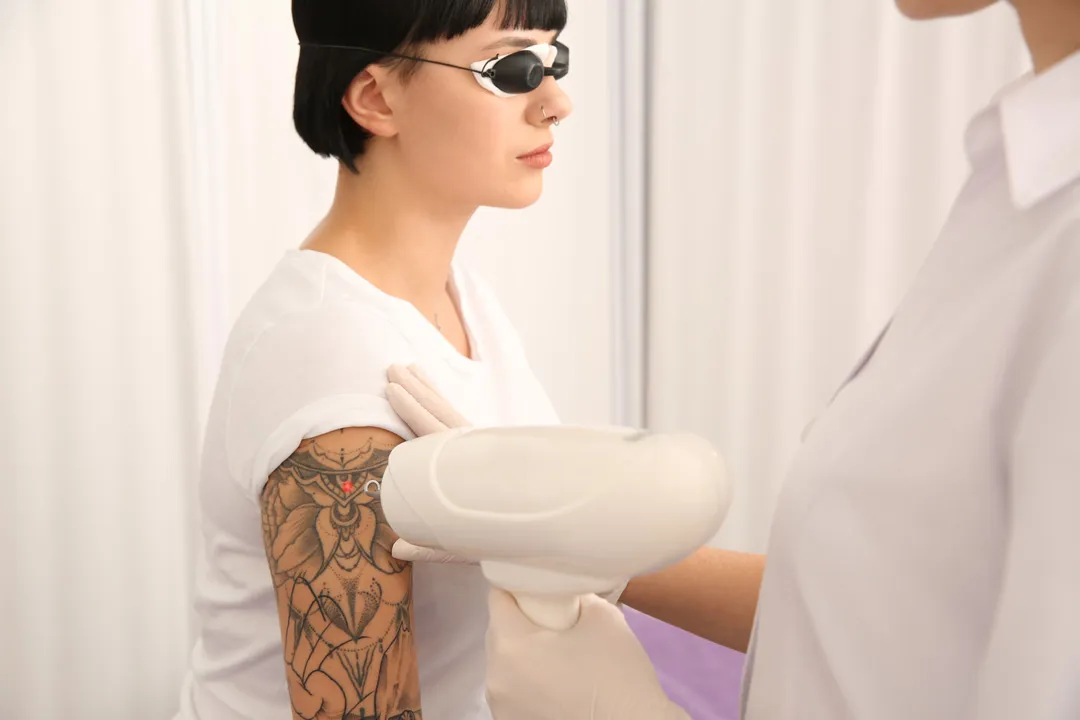
Tattoo removal is a procedure aimed at reducing or eliminating pigments placed beneath the skin through various dermatological methods. Many people choose to have their tattoos removed due to aesthetic preferences, lifestyle changes, or professional reasons. Thanks to advances in laser technology, these procedures can now be performed in a more controlled and effective manner.
According to Assoc. Prof. Dr. Nur Cihan Coşansu, tattoo removal procedures should always be planned under the supervision of a dermatology specialist. Factors such as skin type, tattoo color, depth, and the characteristics of the ink used directly affect the treatment process.
What Is Tattoo Removal?
Tattoo removal is based on breaking down the pigments located beneath the skin so that they can gradually be eliminated by the body.
Laser technologies are the most commonly preferred methods. In these treatments, laser energy targets the pigments and breaks them down into smaller particles. The immune system then helps eliminate these particles naturally.
Who Is Tattoo Removal Suitable For?
Tattoo removal may be suitable for individuals who want to reduce or completely remove their tattoos.
It may particularly be considered for:
- People who are dissatisfied with the appearance of their tattoo
- Individuals who want to remove a tattoo for professional reasons
- People with old or faded tattoos
- Individuals planning to modify or cover an existing tattoo
Following a dermatological evaluation, these individuals may be considered suitable candidates for treatment.
However, the procedure may need to be postponed or may not be suitable for:
- Pregnant individuals
- People with an active skin infection
- Individuals with certain skin conditions
What Are the Tattoo Removal Methods?
Tattoo removal procedures are dermatological treatments designed to reduce or completely eliminate pigments located beneath the skin. Thanks to advances in technology, various treatments can be used depending on the type of tattoo and the individual's skin characteristics. The appropriate method is determined according to factors such as the tattoo's color, depth, size, and the individual's skin characteristics.
Not every tattoo responds to treatment in the same way. Factors such as the type of ink used, application depth, and age of the tattoo directly affect the treatment process. Therefore, a dermatological evaluation before treatment and personalized treatment planning are important.
Laser Tattoo Removal
Laser tattoo removal is one of the most commonly used and effective methods today. During the procedure, laser energy targets the tattoo pigments and breaks them down. These fragmented pigments are gradually eliminated from the body by the immune system.
Laser systems that may be used include:
- Q-Switched Nd:YAG
- Q-Switched PICO
Different laser systems are effective on different pigment colors. Therefore, selecting the appropriate device is highly important for treatment success.
Advantages of Laser Tattoo Removal
- Does not require surgery
- Allows for controlled treatment
- Is effective for many types of tattoos
- The recovery process is generally rapid
How Does the Tattoo Removal Process Work?
1. Dermatological Examination
The tattoo's color, depth, and the individual's skin type are evaluated.
2. Determining the Appropriate Method
A personalized treatment plan is created.
3. Session Planning
The number of sessions is determined according to the characteristics of the tattoo.
4. Laser or Treatment Procedure
The pigments are targeted in a controlled manner.
5. Recovery and Follow-Up
The skin's healing process is monitored regularly.
How Many Sessions Does Tattoo Removal Take?
The number of sessions varies from person to person.
Factors that may affect the number of sessions include:
- Tattoo size
- Colors used
- Pigment density
- Age of the tattoo
- Skin type
- Tattoo size: Larger tattoos generally require more sessions, although size alone is not the most important factor.
- Colors used: Black is generally the easiest color to remove. Dark blue and dark green are moderately difficult, while light green, turquoise, yellow, white, and certain shades of red may be more resistant.
- Pigment density: The denser and deeper the ink has been placed, the more difficult it may be to remove.
- Age of the tattoo: Older tattoos may be easier to remove than newer tattoos because they have generally faded to some extent over time.
- Skin type: Skin tone and the individual's immune response can affect how quickly pigment particles are eliminated.
- Whether the tattoo is professional or amateur: Professional tattoos generally contain deeper and denser pigment, which can make them more difficult to remove.
- Location of the tattoo: Tattoos on areas with better blood circulation, such as the face, neck, and torso, may fade faster than tattoos on the hands, feet, and ankles.
Generally, 6–12 sessions may be required.
Sessions are typically scheduled at intervals of approximately 6–8 weeks.
Which Tattoo Colors Are Easier to Remove?
Colors That Are Generally Easier to Remove
- Black
- Dark blue
- Dark brown
More Resistant Colors
- Yellow
- Green
- White
- Light blue
For some colors, significant fading may be achieved rather than complete removal.
What Should Be Considered After the Procedure?
- The treated area should be kept clean.
- Scabs should not be picked or removed.
- Care should be taken to protect the area from sun exposure.
- Moisturizers recommended by the dermatologist should be used.
- Treatments or activities that may irritate the area should be avoided.
Regular care is important throughout the healing process.
What Are the Possible Side Effects of Tattoo Removal?
Some individuals may temporarily experience:
- Redness
- Scabbing
- Mild tenderness
- Changes in skin pigmentation
When the procedure is performed under specialist supervision, the risk of complications can be reduced.
When Should You Consult a Dermatologist?
It is recommended to consult a dermatology specialist in the following situations:
- Severe pain after the procedure
- Prolonged redness
- Signs of infection
- Excessive skin sensitivity
Early evaluation is important for maintaining skin health.
Tattoo removal procedures can now be performed in a safer and more controlled manner thanks to advances in laser technology. The treatment process should be personalized according to the tattoo's color, size, and the individual's skin characteristics. According to Assoc. Prof. Dr. Nur Cihan Coşansu, performing tattoo removal under the supervision of a dermatology specialist is important both for protecting skin health and achieving more successful results.