
Moles are common skin lesions that form as a result of proliferation in our body. They are mostly harmless, but some people may want moles removed due to aesthetic concerns. Laser mole treatment enables the effective removal of these lesions without requiring surgical intervention. This method has become extremely popular, especially for individuals who are aesthetically bothered by moles.
What Is Laser Mole Treatment?
Laser mole treatment is the destruction of moles on the skin with laser light. High-intensity light targets the color, shape, and size of the mole and destroys the pigment in these areas. However, these moles must first be examined by a dermatology specialist with a dermatoscope to determine whether they are suitable for laser removal. Laser mole removal is extremely safe for lesions that appear to be moles but are not actually true moles (fibroma (skin tag), lentigo, seborrheic keratosis, actinic keratosis, wart, milia, pilar cyst, syringoma, sebaceous hyperplasia, angioma (vascular mole)). However, there is insufficient scientific evidence for the safety of laser removal in true moles, which we call melanocytic nevi. For this reason, the safest treatment method for melanocytic moles is surgical excision. In conclusion, in lesions that appear to be moles but are not actually moles, treatment can be provided with the laser without leaving a mark on the skin or with minimal marking. This method is faster and less invasive than surgical intervention.
Advantages of Laser Mole Treatment
The biggest advantage of laser mole treatment is that it does not require a surgical procedure and requires less recovery time. Some of its other advantages are as follows:
- Minimal Invasiveness: Laser mole treatment does not require incisions or stitches. There may only be mild redness on the skin.
- Fast Recovery Time: The recovery time after treatment is quite short. Most people can return to their normal lives within a few days after the treatment.
- Less Scarring: The laser leaves minimal marks on the skin, and the treated area heals quickly.
- Aesthetic Results: Laser mole treatment only targets the pigment of the mole without damaging the surrounding skin. This provides a more natural appearance.
How Is Laser Mole Treatment Performed?
Laser mole treatment is generally performed by dermatologists or aesthetic surgeons. The procedure steps are as follows:
- Consultation and Evaluation: First, a meeting is held with a specialist doctor. The size, type, and skin structure of the moles are evaluated.
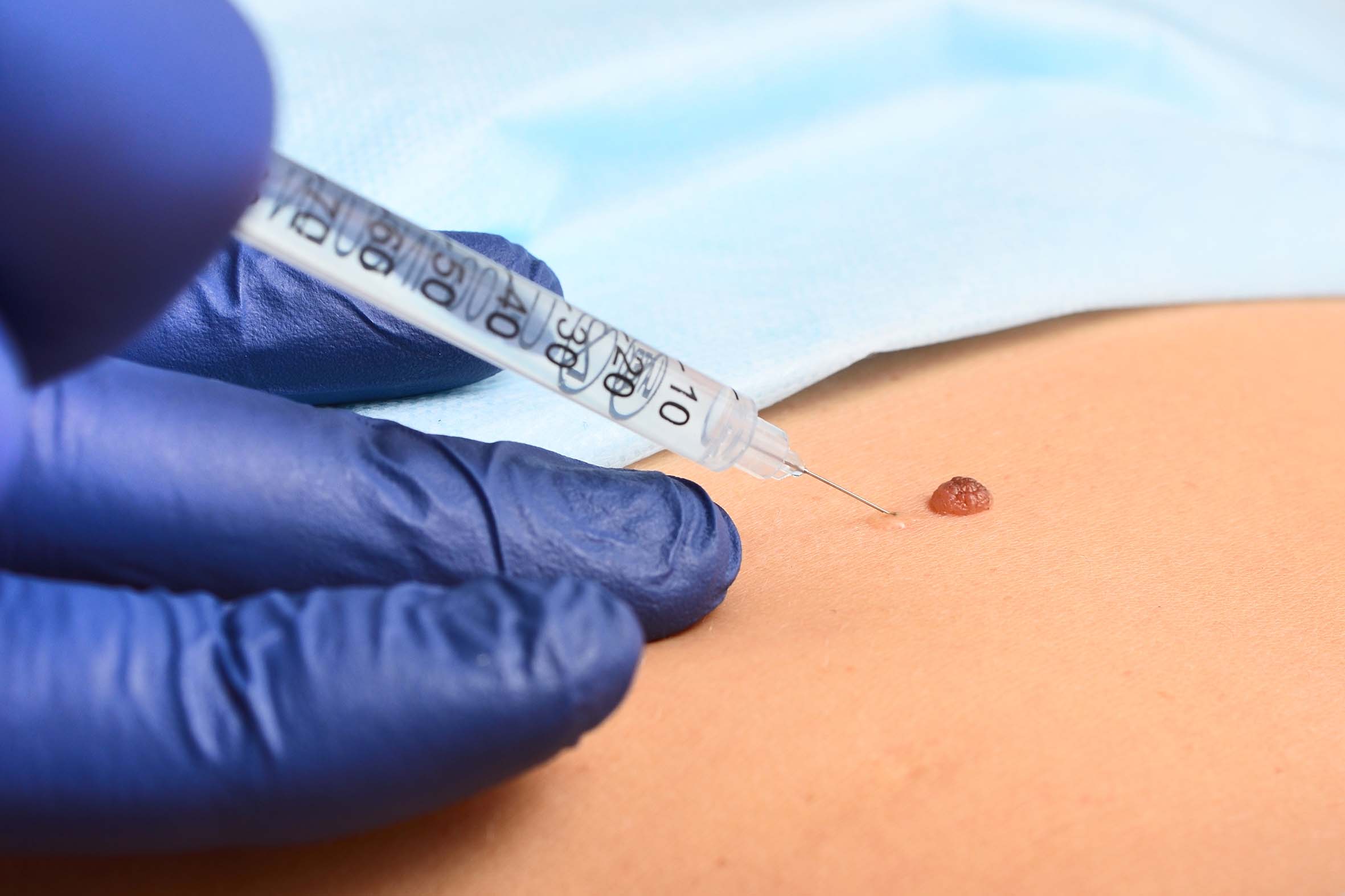
- Local Anesthesia Application: Local anesthesia is usually applied so that no discomfort is felt during the treatment. This numbs the nerves in the area.
- Laser Application: The laser light is directed onto the mole. This process can take a few minutes. However, the duration can vary depending on the size of the mole.
- Healing Process: Mild redness may occur in the treated area after the laser application. Healing usually begins within a few days.
Results of Laser Mole Treatment
The results of laser mole treatment are generally fast and successful. The treated mole disappears within a few days. Initially, there may be slight crusting in the treated area. These crusts fall off within a few days, and new healthy skin forms.
Safety of Laser Mole Treatment
Laser mole treatment is a quite safe procedure when performed by a dermatology specialist. However, like every treatment, some risks may exist. Properly adjusting the laser ensures proper healing of the treated area. Risks that may occur during treatment include infection, scarring, or color change. However, these conditions are rare.
Who Can Have Laser Mole Treatment?
Laser mole treatment is generally suitable for healthy individuals. However, the following conditions can prevent treatment:
- Pregnancy
- Active skin infections
- Moles suspected of skin cancer
- History of allergic reactions
Post-Treatment Care
There are some important care recommendations to follow after laser mole treatment. These recommendations are as follows:
- Avoiding Sun: It is very important to protect the treated area from sunlight. Sun exposure can negatively affect healing.
- Gentle Cleansing: It is important to gently cleanse and dry the treated area. Harsh skincare products should be avoided.
- Not Picking the Crusts: The crusts in the treated area should be allowed to fall off on their own. Picking the crusts can lead to scarring.